Musings of a Musician… or The History of a Reluctant Performer
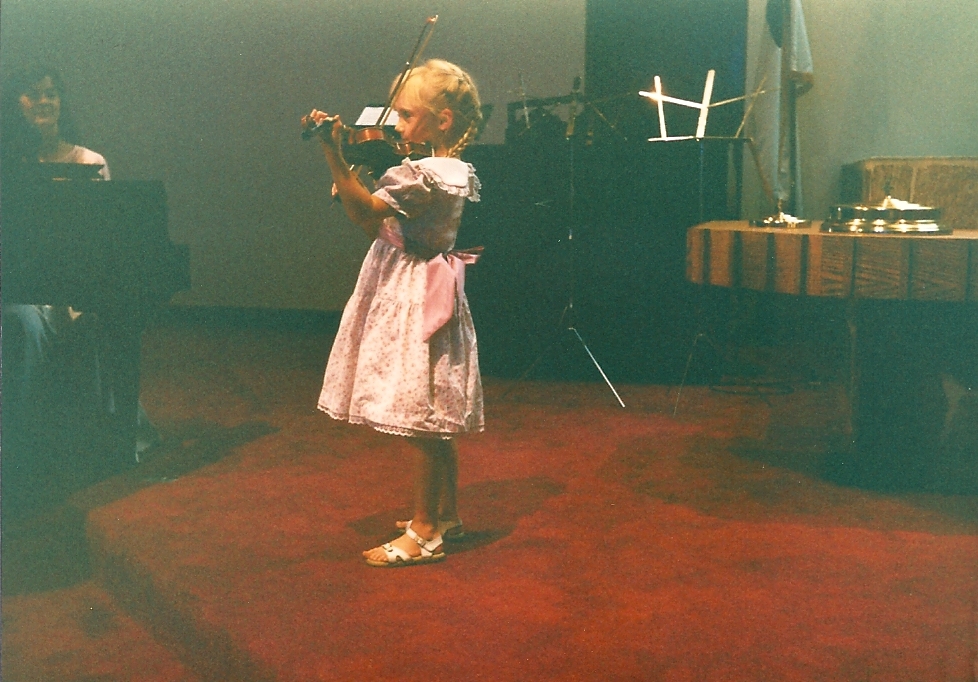
If one had asked me during my formative years what I wanted to be when I grew up, my answer would have varied, depending on my age, with roughly the following progression: a wife and mother, a Suzuki violin teacher, or a music history professor. Why, then, you might ask, am I a performing baroque violinist? Simply put, because I love it, and that love keeps drawing me back whenever I think I have other plans.
My love affair with the baroque violin began over a quarter century ago when I was 10 years old and living in Seattle. The story goes that my mom had noticed that I tended to prefer music from the Renaissance and Baroque over that of other periods, whether in the course of my violin studies, on recordings, or at church. So, when she heard there was a new ensemble in town, the Seattle Baroque Orchestra, she decided to get us involved, and we started ushering at the concerts. I don’t think I was terribly thrilled at first, because I had always rather dreaded concerts. That would soon change! It changed the instant I heard the SBO perform Francesco Geminiani’s 1729 transcription of Arcangelo Corelli’s “La Folia” from his Opus 5 violin sonatas (1700). I had recently learned Corelli’s “La Folia” in a very heavily edited (read: Romanticized) version, in book 6 of the Suzuki Violin School. I had hated every moment of it, finding it stodgy and lifeless, and I was convinced that I couldn’t possibly like Corelli. But the piece as played by the orchestra was something completely new and different: it danced and breathed and had such life! I was Transfixed! I still am. Ever since that experience, Baroque music performed in a historically informed manner has been one of the greatest sources of joy in my life, and the sweetness of Corelli’s music never ceases to move me.
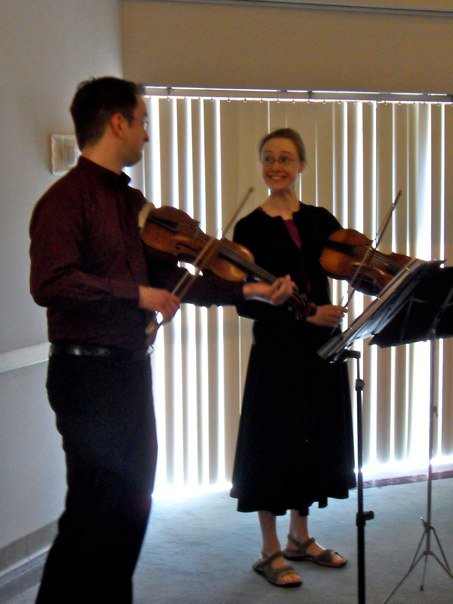
These early experiences with the Seattle Baroque Orchestra led to many wonderful opportunities for me as a young musician with a love of early music and helped me to feel like the early music world was part of my own family. For several years we had the delightful opportunity to host Portland Baroque’s own Curtis Daily in our home. Curtis encouraged my enthusiasm for the baroque violin and gave me my first set of gut strings. How wonderful it has been to get to see him again and to perform with him before his retirement last year! I also was able to study with Ingrid Matthews, co-founder of the orchestra, brilliant violinist, and one of my greatest musical role models, while my beloved Suzuki teacher was on sabbatical. Those early lessons with Ingrid gave me an important first taste for baroque performance practice that left me hungry for more.
The next pivotal encounter I had with the baroque violin was during my college years at St. Olaf College in Minnesota. I had begun school with the goal of becoming a Suzuki violin teacher, so, while I still sought out early music opportunities, it wasn’t the main focus of my studies. I joined the Collegium Musicum in my freshman year, learning treble viol, and that seemed to fill my early music needs at the time. During my sophomore year I began the foundational survey of Western music history that was part of the general requirements for music majors at the time. Once again I fell in love, and I decided to take all the music history courses I could, allowing a nascent desire to study musicology to take root. Then, one day, while sitting in the music library, just minding my own business doing my listening homework, I was struck dumb by the utter beauty of our assignment: “Chiome d’oro” from Claudio Monteverdi’s seventh book of madrigals (1619) sung by Emma Kirkby and Evelyn Tubb (hear it here!). My heart welled with joy, and I wept. I knew then that I had to make playing the baroque violin a greater part of my life.
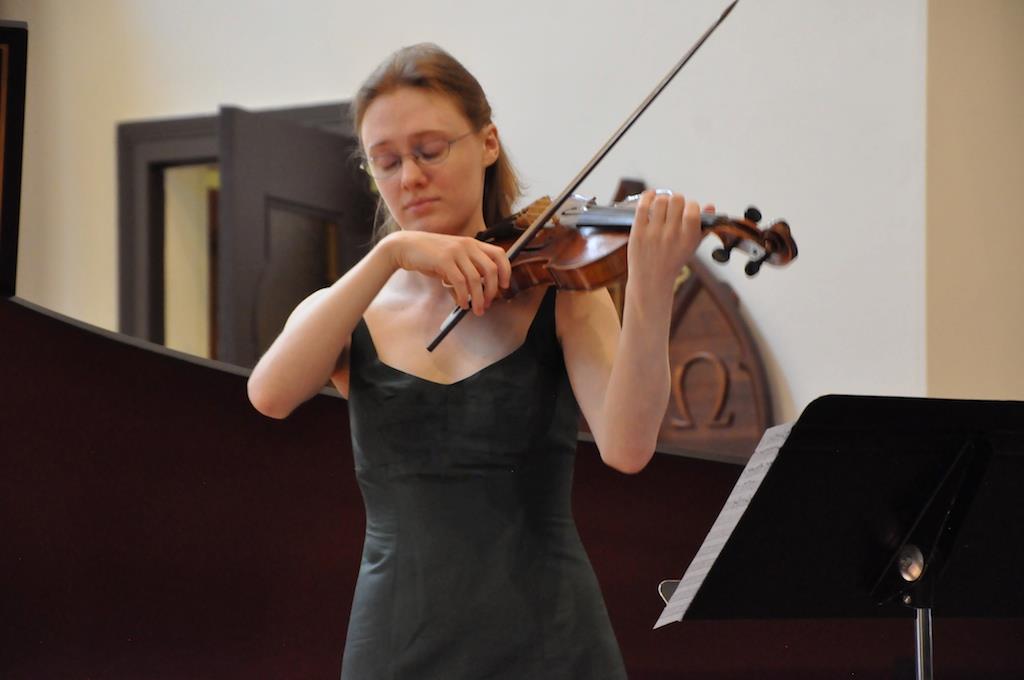

Still, however, I didn’t really believe that I would be primarily a performer. I thought of myself as more of an academic, and I eventually decided to pursue graduate work in musicology with the new goal of following in the footsteps of my favorite college professor, Gerry Hoekstra, and become a music history professor at a small liberal arts college where I could lead a collegium musicum and introduce another generation to the joys of early music. Gerry encouraged me to consider Case Western Reserve University, and I was delighted to discover its Historical Performance Practices program within the musicology department. Here was an academic degree that focused on performance! It seemed perfect for me, and, after studying a bit more with Ingrid, I entered the program in the fall of 2010. It was a wonderful experience, full of satisfyingly rigorous academic courses, an abundance of fulfilling performing opportunities and coachings with luminaries of the field, and the decided honor to study with Julie Andrijeski, a dedicated scholar-performer who is another of my great idols and role models in early music. I loved the academic work, but it gradually became clear to me that the career I dreamed of in academia was not realistic for me. Meanwhile, I slowly began to acknowledge that where I truly felt at home and most happy was on stage, sharing the music I love with others.
So here I am at last, a baroque violinist who has finally realized what probably should have been obvious for years: that performing early music is what makes my heart sing and that I want to share that joy with others. I feel so very grateful that I get do what I love and play with so many wonderful people in Portland and beyond. It is wonderful beyond words to return to music making after the dry days of the pandemic shutdown!
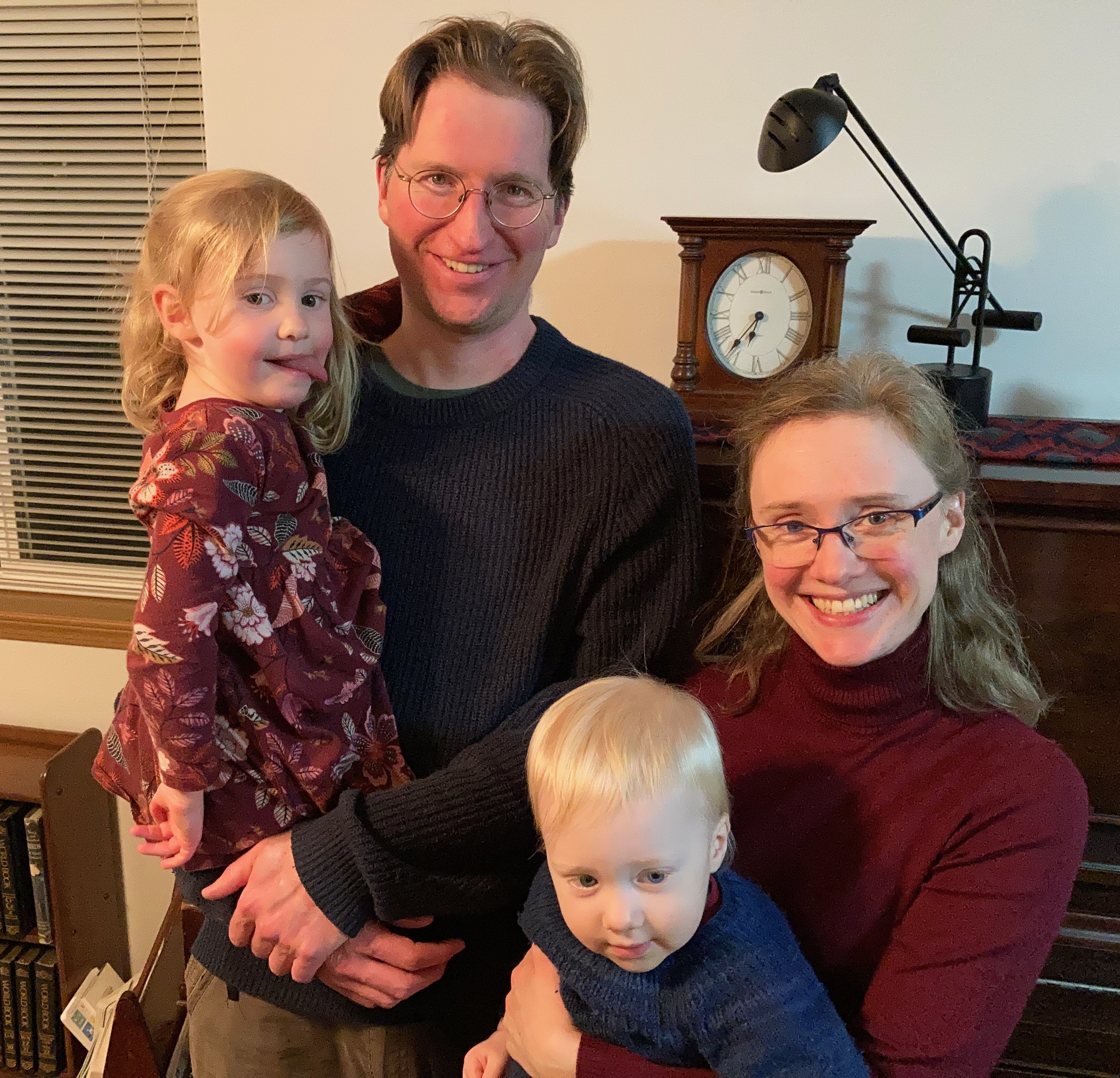
Oh, you may be wondering how I did on my original career goals? I am now happily married to a gentle and kind-eyed man, and we have two delightfully exhausting children ages 4 ½ and almost 2. I also am a Suzuki teacher with a small but growing studio of young musicians in Olympia. (I have not yet encountered “La Folia” while teaching, but when I do, I will do my best to convey the vivacity of the original!) Life is full and good.