
Tuning up the fortepiano for Keys & Teas
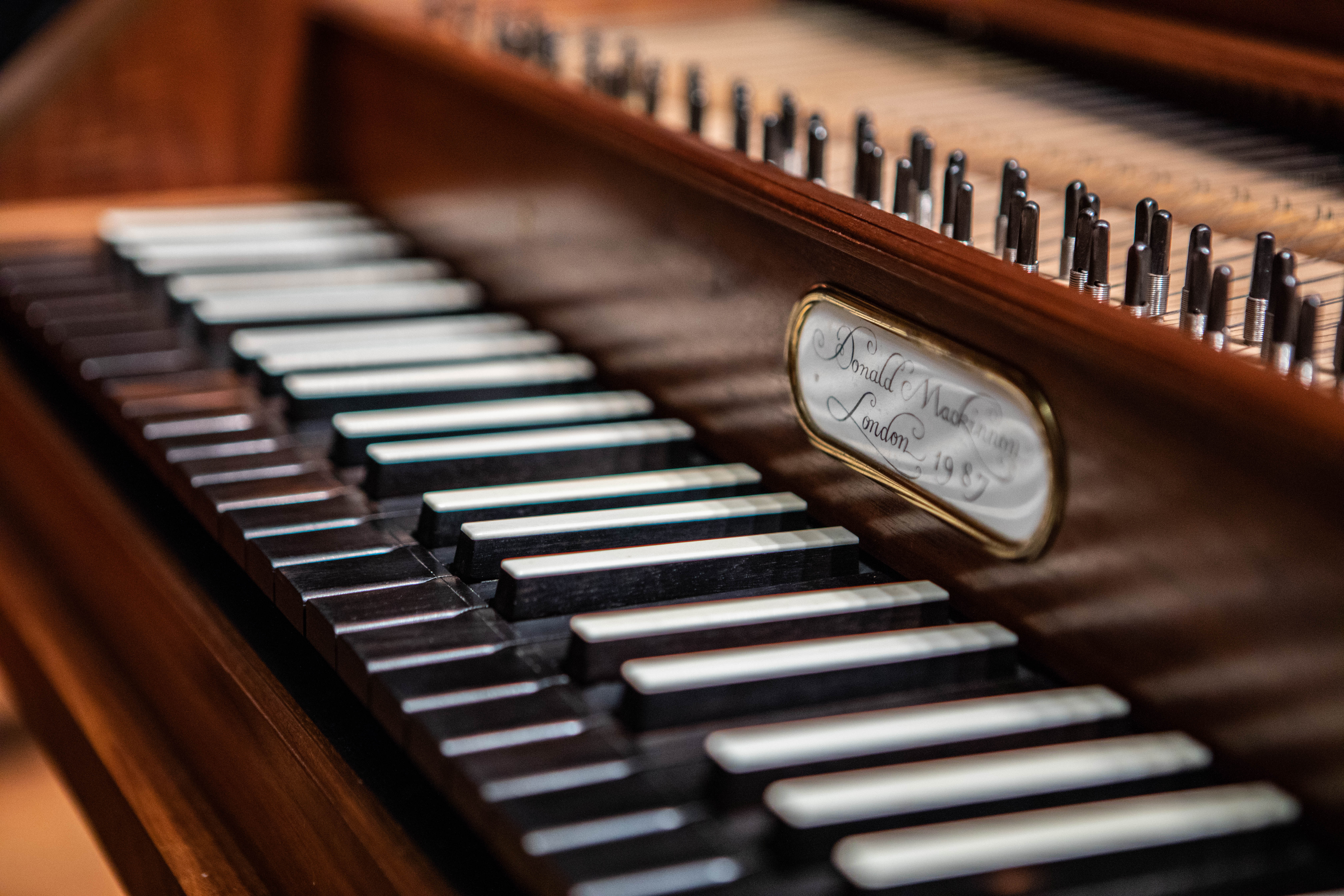
At the heart of this year’s Keys & Teas recital and fundraiser is an instrument you don’t often see on our stage: PBO’s fortepiano, generously donated by our previous Artistic Director Monica Huggett. We rarely break it out, which makes this event all the more intriguing. This particular fortepiano is a Stein copy, modeled on an early instrument by Johann Andreas Stein, one of the most influential piano builders of the 18th century.
Why does that matter? Because Stein changed everything. In 1777, Wolfgang Amadeus Mozart encountered a Stein fortepiano and famously wrote to his father that it was far superior to others he had played—thanks especially to its revolutionary escapement mechanism, which allowed for greater control, nuance, and expressive clarity.
Recently, PBO’s fortepiano received a transformative update from Paul Irvin, a master builder and restorer who has worked full-time on historical keyboard instruments since 1976, building more than 60 harpsichords, clavichords, and related instruments.
Paul was “pleasantly surprised” by how well the instrument was originally constructed, crediting the excellent work of Donald Mackinnon, and noted that fortepianos, once properly voiced and regulated, tend to hold their improvements longer than harpsichords. Built in 1987, the instrument benefited enormously from updates made possible by modern research and materials that simply didn’t exist at the time of its construction.
Paul restrung the fortepiano using historically appropriate materials, replacing the modern steel strings of the ‘80s and ‘90s with phosphorus iron and newly drawn brass wire that more closely mimic the sound composers would have been familiar with. Unlike steel, these materials produce a smoother, richer timbre and a more resonant, longer-lasting sound. He also replaced key components, eliminating overly stiff modern materials that dampened vibration and color.
The result is a fortepiano that sounds more balanced, vibrant, and true to its historical intention. While still quieter than a modern piano, it now bridges the gap beautifully, revealing why the fortepiano represents such an important step in the evolution of keyboard instruments and why it shines so brilliantly in intimate chamber and salon settings.
Our fortepiano spans a range from F1 to F6, offering a sound world that is lighter, more transparent, and more conversational than the modern piano, which is perfect for chamber music.
This year’s program brings that sound world vividly to life, with Artistic Director Julian Perkins at the fortepiano and Christine Wilkinson Beckman on violin.
Together, they’ll perform:
- Franz Schubert: Sonatina in D Major, Op. 137, No. 1
- C. P. E. Bach: Sonata in D Minor
- C. P. E. Bach: Fantasia in C Major
- W. A. Mozart: Sonata in B-flat Major
From Bach’s mercurial imagination to Mozart’s radiant lyricism and Schubert’s youthful warmth, this program is tailor-made for the fortepiano’s expressive voice—and for the close, convivial atmosphere of Keys & Teas.
Secure your seat before January 20 for a bonus raffle ticket and other additional perks for supporting us early and often!
Join us for an afternoon where history, artistry, and community meet over exquisite music (and, of course, tea). Keys & Teas is not just a fundraiser—it’s a rare invitation into PBO’s musical heart.
KEYS & TEAS 2026
Feb 07, 2026 | 2:00 PM
Sentinel Hotel
614 SW 11th Ave
Portland, OR 97205
Tickets are still available